
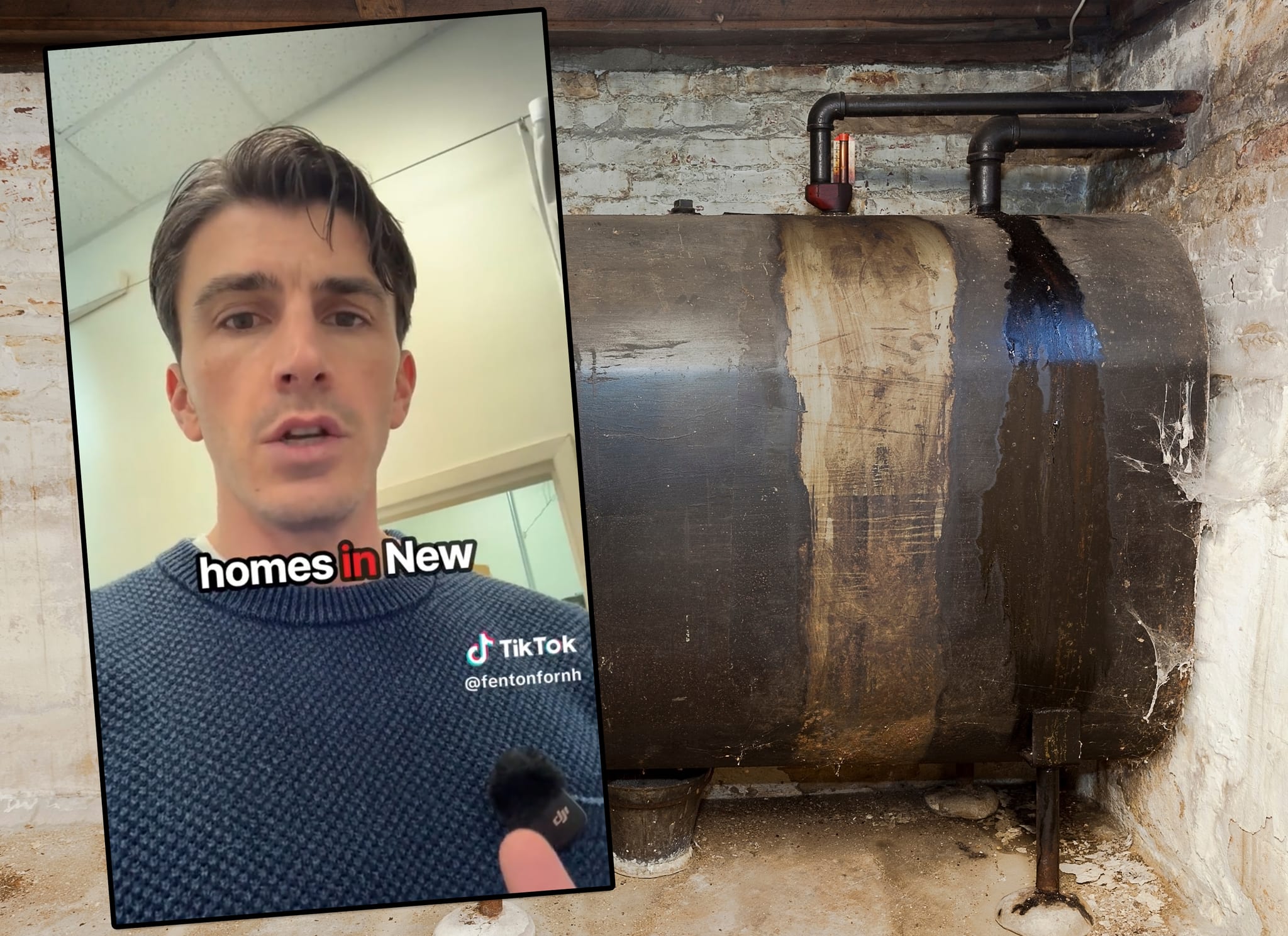
KEENE, N.H. — Should New Hampshire regulate the prices charged by home heating oil dealers? That's the question being raised by State Senator Donovan Fenton, who is criticizing the lack of government oversight of heating oil prices as Granite State homeowners face significantly higher heating bills this winter.
In a video posted to TikTok, the Keene Democrat questions why electricity, natural gas, and certain water utilities are subject to state regulation while home heating oil dealers are free to set their own prices without similar oversight.
Fenton opens the video by comparing the household expenses, pointing out that state regulators oversee utility rates and hold public hearings before certain rate increases can take effect.
"One bill has none of that," Fenton says. "No regulator, no public oversight."
That bill, he explains, is for home heating oil.
While Fenton does not explicitly propose legislation to regulate heating oil dealers or establish government price controls, his remarks raise questions about whether New Hampshire should extend some form of regulatory oversight to the industry.
Unlike regulated utilities, home heating oil dealers generally establish their own retail prices based on wholesale fuel costs, transportation expenses, operating costs, and competition.
New Hampshire does have consumer protection laws governing heating oil dealers, including requirements involving prepaid contracts and disclosures. However, the state does not regulate the retail price of heating oil through the same rate-approval process used for public utilities.
The distinction is particularly significant in New Hampshire, where Fenton says approximately four in ten households rely on heating oil to keep their homes warm.
Fenton points to the dramatic increase in heating oil prices, citing an October statewide average of approximately $6 per gallon, compared to about $3.50 at the same time last year.
At those prices, he says filling a standard 275-gallon heating oil tank would cost approximately $1,660, compared to about $960 a year earlier.
Federal data confirms that heating oil prices have increased substantially. According to the U.S. Energy Information Administration, New Hampshire's average residential heating oil price reached $6.03 per gallon during the week of October 19. The average has since declined to $5.74 per gallon as of November 16, but remains approximately 60 percent higher than a year ago.
Fenton argues that the rising costs disproportionately affect homeowners living in older houses, many of whom lack the financial resources to replace their existing oil-fired heating systems.
He points out that homeowners have increasingly been switching to natural gas or electric heat pumps, but the upfront expense of making that transition can be substantial.
As a result, Fenton argues, households still relying on heating oil may be particularly vulnerable to sudden price increases.
The senator also directs criticism toward President Donald Trump, blaming the ongoing conflict involving Iran for contributing to higher energy costs. He criticizes political leaders at both the state and federal levels for what he describes as a reluctance to challenge the administration over rising prices.
Beyond the price of heating oil itself, Fenton raises concerns about the future of federal assistance for families struggling to pay their heating bills.
He points to the Low Income Home Energy Assistance Program, or LIHEAP, which provides federal funding to help qualifying low-income households pay for heating expenses.
Fenton says more than 57,000 Granite Staters rely on the program and warns that proposed federal funding cuts could leave vulnerable families without assistance.
The Trump administration has proposed eliminating LIHEAP in its federal budget, although Congress has not enacted that elimination. Approximately $3.6 billion in federal funding for fiscal year 2027 was released to states and other recipients in October.
Fenton also warns about the December 11 expiration of the federal government's current short-term spending agreement, expressing concern about the uncertainty surrounding future assistance.
The video ultimately raises two questions about how New Hampshire residents pay to heat their homes: whether heating oil prices should face greater state oversight, and whether federal assistance will remain available for families unable to afford those costs.
Although Fenton does not outline a specific regulatory proposal, his comparison between heating oil and state-regulated utilities introduces a potentially significant policy debate in a state where hundreds of thousands of residents depend on oil for heat.
 Keene Approves New Airbnb Regulations as Vacation Rentals Compete With Hotels for Tourists
 Two Vehicles Heavily Damaged in Route 9 Crash in Nelson, Highway Closed for an Hour
 Man arrested in Nashua shooting case involving juvenile
 Fenton pushes to widen free school lunch eligibility
 Keene Council advances talks on kratom, firefighters, housing and downtown traffic