

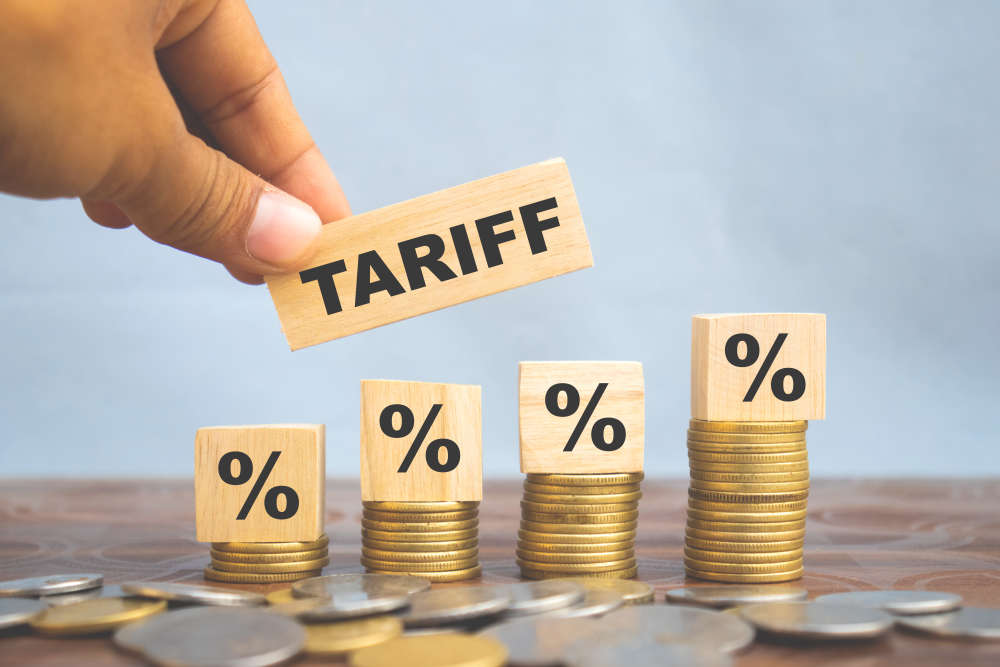
The new charges will affect items including motor vehicles, dairy and alcohol.
The White House said Monday evening that it will impose 50% tariffs on a wide range of Canadian products beginning Aug. 19, a move that has deepened worries among Vermont officials, business leaders and economists who have spent more than a year tracking the effects of President Donald Trump’s trade approach.
The new charges will affect items including motor vehicles, dairy and alcohol. They come on top of a trade environment that has already hurt Vermont’s tourism sector, where Canadian visitation has dropped sharply as relations have worsened and cross-border trade tension has intensified. State economists have also reported weaker tax collections in industries that depend on visitors.
Canada remains Vermont’s dominant foreign trade partner. According to an Eastern Border Transportation Coalition report, the state exported more than $600 million in goods to Canada and imported more than $2 billion in 2024. In 2025, Vermont’s biggest imports from Canada included about $600 million in chocolate and cocoa products, which do not appear to be covered by the latest tariffs, along with more than $230 million in jewelry and precious metals, some of which may be affected.
The White House said the action is meant to respond to what it called Canada’s discriminatory treatment of American products. It pointed to provincial restrictions on U.S.-made alcohol as one example. The U.S. Trade Representative said the tariffs would apply to roughly $20 billion in Canadian imports, a relatively modest share of total purchases from Canada each year. Unlike several earlier Trump administration trade actions, these new fees would also reach products covered by the 2019 United States-Mexico-Canada Agreement.
Canadian Prime Minister Mark Carney said Tuesday that he and Trump had agreed to speed up negotiations in hopes of avoiding the tariffs, according to the Wall Street Journal.
In Vermont, reactions were swift. Tom Kavet, an economist for the Vermont Legislature, said late last year that Washington’s trade posture toward Canada was already a costly mistake. On Tuesday, he described the latest round as pure stupidity.
Kavet said the tariffs, especially when layered onto existing Trump-era levies, would likely push up prices for consumers, make manufacturing less efficient and cost jobs. He warned that Vermont could be hit particularly hard because many products cross the border multiple times during production. He also said any reversal through negotiations or court action could take years and should not be treated as a temporary bluff.
State Treasurer Mike Pieciak echoed those concerns, saying the tariffs would function like a tax and would fall especially hard on communities near the border. He said state government has only limited tools to blunt the effects.
Amy Magnus, who directs customs affairs and compliance for St. Albans-based broker A.N. Deringer, said the announcement caught the industry off guard. Her firm helps businesses move goods through customs, and she said a sudden 50% tariff is highly disruptive.
Magnus and Pieciak both noted that products likely to be affected include goods important to everyday life in Vermont, such as outdoor clothing, dairy and materials used in home construction. Magnus said prices could rise sharply or supplies could dry up altogether if the policy takes hold, hurting consumers and businesses on both sides of the border. While she acknowledged that Canadian trade rules may disadvantage U.S. products in some limited areas, she said the scale of this response is too broad to make practical sense.
She also warned that the repeated tariff changes and legal fights surrounding them have created a climate of instability that could take years to unwind, if it ever fully does.
Canadian leaders at the provincial and federal levels have already criticized the move, and Ontario Premier Doug Ford has called for retaliatory action if the White House proceeds. Pieciak said that kind of escalation could push Canada to seek stronger and more dependable trading relationships elsewhere.
Sen. Peter Welch, D-Vt., also condemned the plan on Monday, saying it would intensify Trump’s trade conflict with Canada and cause lasting damage to Vermont’s economy. He argued that Congress should reclaim its authority over trade policy and hold the administration accountable for the disruption it has caused.
The tariff order was issued under a provision of the Tariff Act of 1930, according to national reporting, and it has not previously been used this way. That could open the door to legal challenges in the weeks ahead.
 Vermont early voting turnout reaches 88,000
 FEMA Approves More Than $5.8 Million for Vermont Flood Recovery
 Animal cruelty case against East Dorset veterinarian Bob Wendell ends in dismissal
 Brattleboro man faces stalking and threatening charges after Walgreens incident
 Animal cruelty case against East Dorset veterinarian Bob Wendell ends in dismissal




Comments
Add a comment